
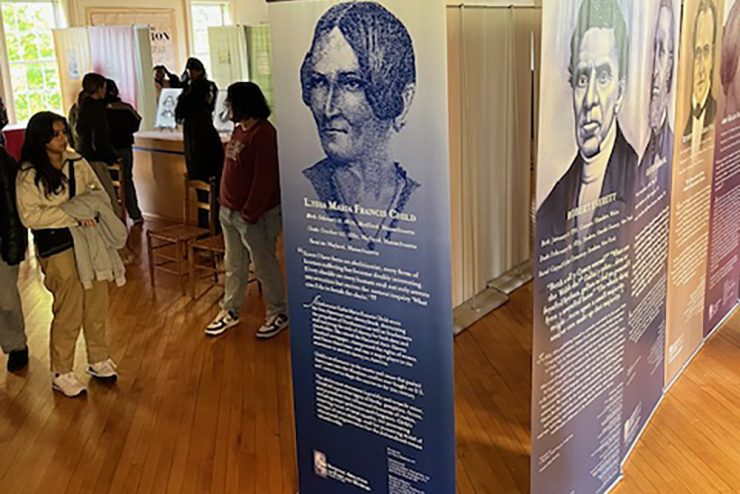
 On October 14-15, students from the Living Learning Community at Stony Brook University, under Campus Residences’ Socially Just Seawolves (SJS) program, embarked on a meaningful journey upstate to the National Abolition Hall of Fame and Museum in Peterboro, NY. The experience provided a profound connection to history, illuminating the struggle for abolition and its relevance to contemporary social justice efforts.
Prior to the visit, the museum staff prepared extensively, tailoring the experience to align with SJS’s mission of addressing social, economic and political inequalities. This ensured that the narratives shared during the visit resonated with the students’ educational objectives.
Brittany Platin, assistant director of college housing for the Living Learning Community at SBU, shared insights into the visit and highlighted two particularly impactful aspects. First, students had the opportunity to explore multiple historic buildings, sitting under the very roofs where abolition work once unfolded. The weight of history felt in these spaces left a lasting impression. Second, the Hall of Fame Gallery brought history to life, captivating students with engaging displays that celebrated the achievements of key figures in the abolitionist movement.
 One unforgettable moment for the group was the tour of the Gerrit Smith Estate. Gerrit Smith was a wealthy and influential abolitionist, who used his resources to champion the cause. Students stood in his original office, a modest single-room building, and reflected on the historic meetings that took place there with figures such as Frederick Douglass. The space was a powerful reminder of the significant work accomplished through individual dedication and collaboration.
When reflecting on the visit, Platin expressed hope that students would carry with them the message that individual actions can affect meaningful change. “It is the collaborative work of individuals that helps work towards equity in our community,” she noted, emphasizing the importance of continued activism and unity in addressing social inequalities.
— Rachel Gurevich





Add comment