

Thirty students who struggled in their first year improved their GPAs by, on average, one full point on a 4.0 scale. Such a jump is rare for most college students. For many, an increase of a few tenths of a point is a big deal.
But for these 30 students, some of whom were questioning if they should return to continue studying at Stony Brook, the answer lay in taking advantage of a new program designed to help students on or near academic probation to refine their study skills, earn credits and connect with resources to support their success — all paid for by the university, not the students or their families.
The Sophomore Academic Resilience Program (SARP) offers holistic support so students can strengthen study skills and time management, and learn how to ask, find and use campus support services. So far, the lessons seem to have taken hold.
“So many of our students are working full time in addition to being students. That’s something that’s unique to Stony Brook. Our students are doing everything they can to stay afloat. If they’re not succeeding, how can we help them to succeed so they’re not wasting their money?” said Nina Freiberger, lecturer in the School of Communication and Journalism, who taught an intercultural communication class as part of SARP. “This kind of program helps to balance the scales of equality versus equity; some students come into college with the skillsets and know what to expect and others don’t.”
Stony Brook University recently won the Innovative Institution Award from EAB Strategic Advisory Services because of the program. Stony Brook was one of three institutions to win the educational research organization’s award, designed to celebrate experimentation, collaboration and bold ideas in higher education.
This is the second year in a row Stony Brook has offered SARP to students at the end of their freshman year. Last year’s cohort of 30 students saw similar results, and most of that first cohort are now in their junior year and on track to graduate. Four of the students from the first cohort returned the second year to serve as mentors and guides for their younger peers, earning internship credits for their efforts.
“Talk to your mentors, they’ve been through everything you’ve been through,” one anonymous participant said in a survey.
“SARP is handing you jewels for free and you’d be ignorant not to take them,” said another.
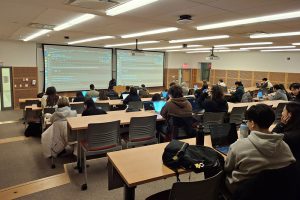
During the five-week program, students earned five credits: three to fulfill a requirement of the Stony Brook Curriculum, and two from an academic skills course. They met with academic advisors, financial aid staff and other student support staff. Additionally, the program offered social events and a weekly dinner, as well as additional workshops from University Libraries, the Center for Prevention and Outreach, Undergraduate Retention Initiatives and Success Engagement, and the Undergraduate Colleges.
Students received meals and housing on campus for the duration of the program, at no cost to them.
The support didn’t stop when the fall term began. The Division of Undergraduate Education has continued to offer workshops, social events and weekly group meetings for the students to help them stay on track and strengthen the skills they started building over the summer.
“This program is time and resource intensive for the university but also for the students. Many of our students work to pay their way through school or to help their families, and not all of them can afford to give their summers to this kind of program,” said Rachelle Germana, senior associate provost for undergraduate education. “That these students were able to put in the time and effort to be here really demonstrates just how committed they are to their own success and achieving their dreams.”
In addition to the significant increases in students’ GPAs, almost all of them reported feeling more confident and less anxious about their academic ability. They reported significant improvements in their time management, motivation and confidence. They said they felt more able to face and overcome challenges.
“Stony Brook is a top university; classes are going to be difficult and faculty are going to have high expectations. These students earned their spot here and we want to see them succeed. But the reality is that our students are balancing a lot, personally and academically,” said Germana. “This program acknowledges that. It helps students lean into the experiences and strengths they already have, and direct those strengths toward being successful at Stony Brook and toward their goals after graduation.”






Add comment