A panel of Stony Brook experts broke down democracy’s current threats through the lenses of political science, social welfare, journalism, and public health.

For the second time this year, Stony Brook’s Collaborative for the Earth brings conversations about environmental and human health to audiences through a national broadcast special
Stony Brook University's Mahdieh Danesh Yazdi has been named to the second class of the Chancellor’s Horizon Award for Faculty Research and Scholarship.
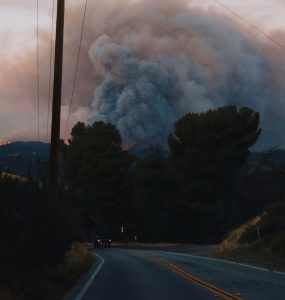
A new study assesses the effects of wildfires over two decades and shows that wildfire smoke contributes to excess deaths in the United States each year.
Using future climate scenarios based on wildfire damages in North America, scientists estimate that up to 10,000 or more lives may be saved annually in the United States if society can mitigate climate change by keeping...
Two newly published studies provide educators more data on public opinion about smartphone bans in schools and how much time students are on their smartphones.
A new brain imaging study led by researchers at Stony Brook University has uncovered measurable physical changes in the brain structures of WTC responders who have chronic PTSD.
A study led by researchers in Stony Brook’s Program in Public Health revealed sleep habits during adolescence predicted better young adult cardiovascular health
A new study, led by Stony Brook WTC Health and Wellness Program researchers, centers on 9/11 Ground Zero first responder disease incidence for lung cancer.
A study led by Stony Brook faculty projects that smoke exposure from wildfires in the coming decades could result in thousands of excess deaths in the US.
A study co-authored by Stony Brook assistant professor Minghao Qiu reveals that location matters as much as capacity for the climate benefits of solar power.
In a quiet corner of Stony Brook University Hospital, a unique garden is blossoming with plants, on a mission to reveal an unseen threat: ground-level ozone.
A study of World Trade Center responders shows that symptoms can change and can help predict their physical impairment and mental health many years after trauma
Stony Brook University is ramping up efforts to develop climate-focused academic programs to prepare students for the workforce demands of a warming planet.
A study led by Stony Brook University researchers used artificial intelligence and social media to assess rates of depression and anxiety in American counties.
This ensures greater access to affordable, student-centered, graduate health management education with the benefits of a program that has met rigorous national standards.