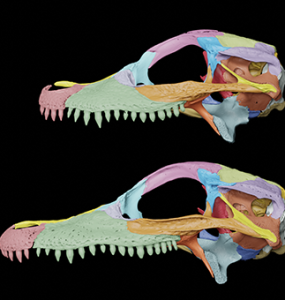
A new paper lays the groundwork for a new approach to correctly identifying an ancient animal fossil, which could be significant for vertebrate paleontology.
Research published in Nature has revealed nanotyrannus was its own species, which rewrites what scientists have suspected about T. rex’s growth and development.
The family of Professor Peter W. “Pete” Bretsky Jr. honored his legacy by establishing an endowed scholarship to support undergrads studying geosciences.
Kimberley Chapelle helped discover and identify the find, named Musankwa sanyatiensis Long-necked herbivorous dinosaurs known as sauropodomorphs — a group of mainly bipedal dinosaurs that lived some 210 million years...
An international team led by Stony Brook University paleontologist Andrew J. Moore has revealed that a Late Jurassic Chinese sauropod known as Mamenchisaurus sinocanadorum sported a 15-meter-long neck. The new analysis...