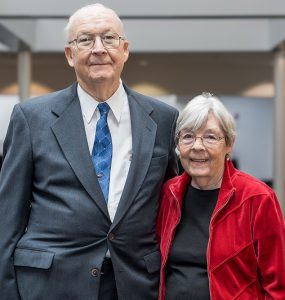
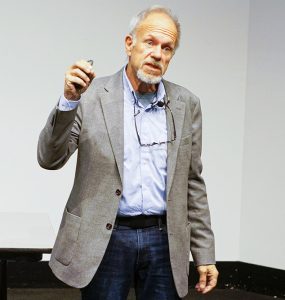
Stony Brook University Professors Robert Thacker and Elizabeth Watson have received awards from the New York State Department of Environmental Conservation.
Stony Brook researchers are using satellite images of Adélie penguin colonies to determine what they eat and how sea ice changes affect the Antarctic food web.
A new Stony Brook-led study that uses ancient human DNA analyses is helping scientists learn about the Early Medieval people who inhabited Western Europe.
A Fulbright Amazonia paper co-authored by Stony Brook Professor Liliana Dávalos has won an Editor's Choice Award from the journal Environmental Research Letters
Stony Brook University scientists are learning more about how Eurasian shrews can adapt to winter, which can shed light on metabolic and neurological diseases.
Researchers call for action on reporting, mitigation and adaptation A new study published in Environmental Research Letters and conducted by an international team supported in part by the Fulbright Amazonia Program...
The Center for Changing Systems of Power presented a roundtable featuring four summer grantees who each had an opportunity to share their work and its impact.
The American Humane Society documentary film, 'Escape from Extinction: Rewilding,' was screened on September 24 as part of Stony Brook's Science + Cinema.
Five early-career assistant professors were awarded the Stony Brook Trustees Faculty Award, worth up to $20,000 each to support research and scholarship.
Tara Smiley, an assistant professor in Stony Brook's Department of Ecology and Evolution, has received the U.S. National Science Foundation (NSF) CAREER Award.
A Stony Brook University doctoral student was awarded a grant from The Leakey Foundation to study how primates have adapted to living in coastal Kenya.
Jim and Janice Rohlf have been connected to Stony Brook University for a combined 78 years, and have been supporting students and programs for almost 40 years.
Timothy Mousseau was invited by the SBU Department of Ecology and Evolution to speak about Chernobyl, Fukushima and other “hot places" as part of Darwin Day.