
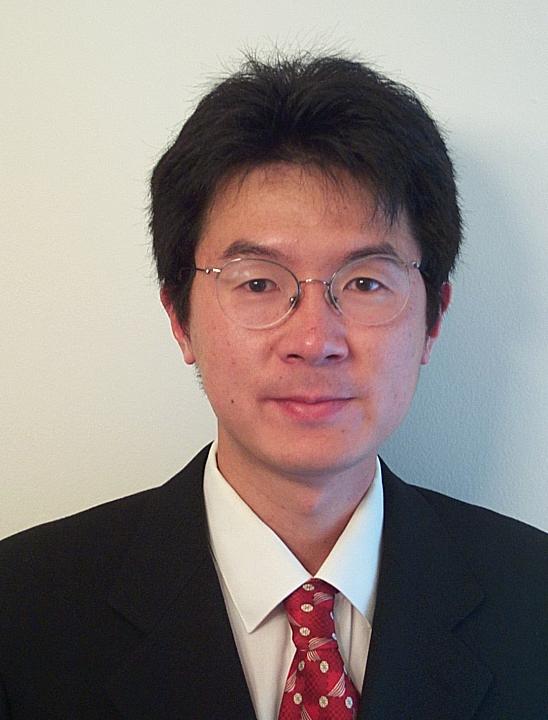
Xianfeng Gu, SUNY Empire Innovation Professor in the Department of Computer Science, has been named a Fellow of the Solid Modeling Association (SMA) in recognition of his fundamental contributions to the theory and practice of solid modeling. The recognition was announced at the 2026 Symposium on Solid and Physical Modeling and honors Gu’s work bridging deep mathematical theory with practical algorithms that have advanced solid modeling, geometric design and applications across engineering, medicine and artificial intelligence.
Gu is a principal founder of Computational Conformal Geometry, an interdisciplinary field that translates ideas from modern geometry and topology into computational tools that can represent, analyze and manipulate complex shapes. His work has helped establish the mathematical foundations underlying advances in geometric modeling and processing, including methods used to construct digital surfaces, generate structured meshes and model three-dimensional objects.
“My research focuses on teaching computers to perceive, understand, and interact with the physical and geometric world around us,” Gu said. “This forms the foundation of ‘Physical AI’— creating world models that allow machines to comprehend space and physics just as humans do.”
Although fields such as solid modeling, medical imaging and generative AI may initially appear unrelated, Gu sees a shared mathematical foundation beneath them.
“What excites and surprises me most is that while these fields appear worlds apart on the surface, the underlying mathematical and geometric essences of their core problems are profoundly interconnected,” Gu said.
That connection has allowed concepts developed within pure mathematics to find applications far beyond their original settings. Gu and his collaborator, Professor Arie Kaufman, for example, adapted geometric methods for virtual colonoscopy, using them to parameterize and flatten images of colorectal surfaces so that physicians could examine them more effectively. The resulting technology was patented and licensed to Siemens.
More recently, Gu has applied geometric theory to generative AI. In collaboration with Stony Brook Computer Science Professor Dimitris Samaras, he is developing physics-grounded approaches designed to improve visual consistency and alignment between prompts and generated content in text-to-video and video-to-text systems. The work draws upon the Monge-Ampère equation, traditionally used to study the geometry of convex surfaces, to address hallucinations and provide a more rigorous framework for understanding generative models.
“Deep mathematical theories possess an uncanny ability to unleash immense, unexpected power in fields far beyond their origin,” Gu said. “Seeing abstract, elegant geometry seamlessly transform into life-saving medical software and trustworthy artificial intelligence has been the most rewarding journey of my research career.”
Gu’s research has also contributed to efforts to close a longstanding divide in automotive engineering. Computer-aided design systems allow engineers to create precise digital models of vehicles, while finite element analysis is used to simulate how those vehicles respond to physical forces. Moving a design accurately and efficiently between those two systems, however, has historically required extensive time and labor.
Gu and his collaborators applied isogeometric analysis to a full body-in-white crash simulation of a Dodge Neon. The body-in-white is the vehicle’s assembled metal framework before components such as the engine, interior, and paint are added. According to Gu, the project marked the first successful application of isogeometric analysis to a full real-world automotive crash simulation, demonstrating a potential way to connect the vehicle’s original design model more directly with engineering analysis—a problem that costs the global manufacturing industry billions of dollars and months of engineering time each year. His team’s work illustrates how mathematical advances can ultimately affect highly practical questions, including how vehicles are designed, modeled and tested.
For Gu, being named an SMA Fellow recognizes the collective effort behind his research and the broader significance of connecting solid and physical modeling with computational conformal geometry.
“This honor is a profound validation of the decades of dedication by my collaborators, students and myself,” Gu said. “More importantly, it underscores the real-world impact of bridging solid and physical modeling with computational conformal geometry—a cross-disciplinary field we have been privileged to pioneer and advance.”
“Professor Gu has a remarkable ability to translate ideas rooted in deep mathematics into practical tools that address consequential real-world problems,” said Samir Das, professor and chair of the Department of Computer Science. “His selection as an SMA Fellow is a fitting recognition of his foundational contributions to solid modeling and the extraordinary breadth of their impact, from engineering and medical imaging to emerging areas of artificial intelligence.”
Looking ahead, Gu and his collaborators are pursuing several foundational challenges spanning geometry, engineering and artificial intelligence. One focus is hexahedral decomposition, a longstanding challenge in solid modeling that Gu’s team is addressing through topology and geometric group theory.
Gu is also applying optimal transport and geometric insights to make generative AI more explainable and reliable while developing three-dimensional foundation models capable of understanding spatial relationships and physical laws.
“We want to equip AI with the geometric intuition needed to understand the physical world,” Gu said, “paving the way for advanced robotics and spatial computing.”
Gu is a member of Stony Brook University’s chapter of the National Academy of Inventors and a recipient of the National Science Foundation’s CAREER Award. His research has received multiple best paper awards, the Morningside Gold Medal for Applied Mathematics, and he was recently selected as a Co-Principal Investigator on a new U.S. Department of Energy (DOE) Genesis Mission project, “Geometry-Informed AI for Accelerated Multiphysics Co-Design of Wide-Bandgap Power Modules.”





Add comment