
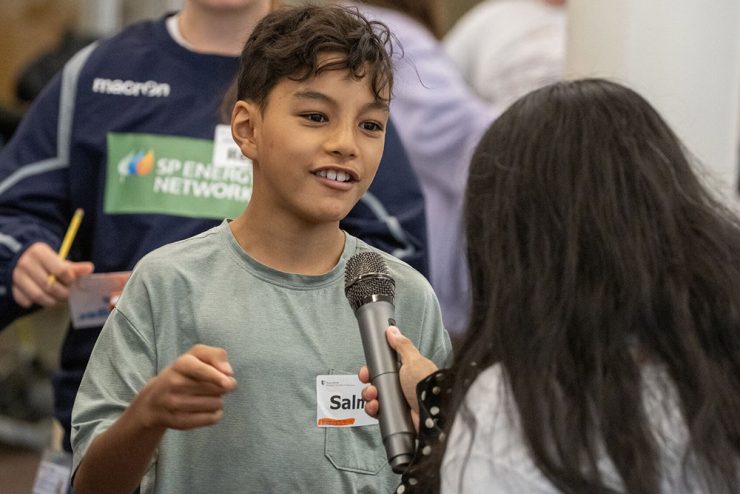
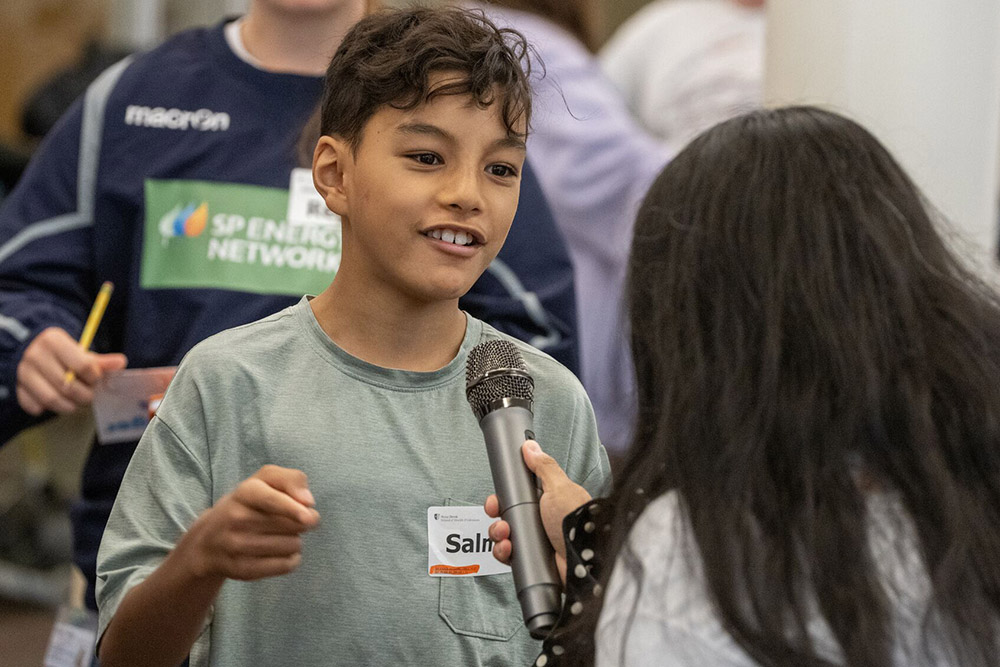
One camper sang. Another danced. Others performed karate, played instruments, twirled flags, dribbled a basketball and brought a ventriloquist’s puppet to life.
At the Camp Dream. Speak. Live. open-mic talent show at Stony Brook Southampton, the applause wasn’t only for their talents but also for their willingness to stand before an audience in the Avram Theater and be themselves.
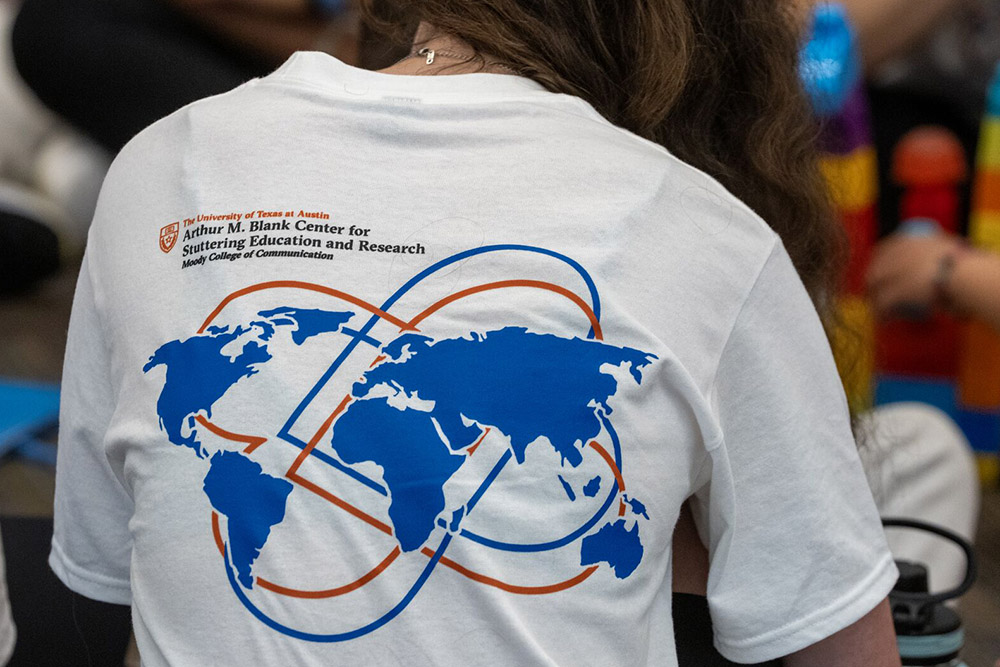
Hosted by Stony Brook University’s Department of Speech-Language Pathology in the School of Health Professions, which partners with The Arthur M. Blank Center for Stuttering Education and Research, Camp Dream. Speak. Live. is not designed to teach children how to hide or fix a stutter. Instead, the weeklong program, held July 27 through July 31, helped 17 children, ranging in age from 5 to 17, communicate with confidence, advocate for themselves and understand that their voices did not need to be fixed.
Campers traveled from communities across Suffolk County, along with one camper from Boston, to participate in the free program.
“This camp isn’t about fluency or strategies,” said Joy Kling, director of clinical education in the Department of Speech-Language Pathology. “This camp is truly about being a person who stutters. Stuttering openly, being confident and communicating effectively and advocating meaningfully and saying what they want to say.”
Throughout the week, campers explored the CARE Model, which emphasizes communication, advocacy, resiliency and education. Throughout the week, campers learned to advocate for themselves, communicate confidently and better understand their own experiences.
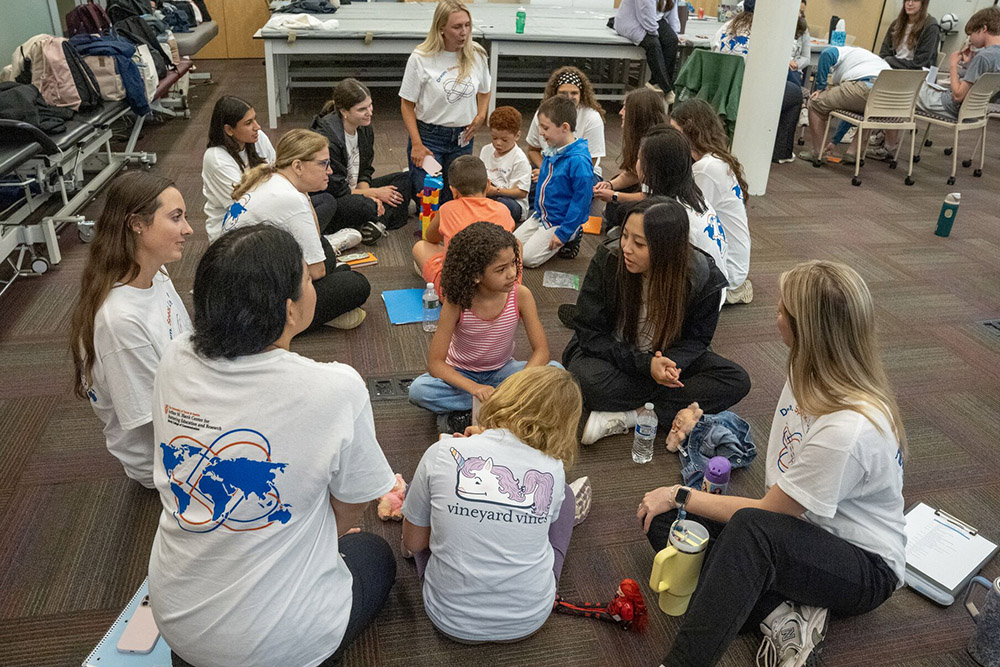
About 60 percent of this year’s campers returned after participating in the program’s New York debut at Stony Brook Southampton last summer.
Kling noticed the difference in these campers immediately. “Some of these kids came in from last year, and they’re on the microphone day one,” she said. “They might not even have really gotten up last year to communicate. So it’s pretty impressive and really heartwarming to see how much growth they’ve had in such a short amount of time.”
Liam Jerome, a rising fourth grader from Coram, was one of the returning campers. His favorite activities included painting a Minecraft scene and making a bracelet decorated with his name and colorful beads.
Asked how he felt about speaking after two summers at camp, Liam said, “I know that I’m fine the way that I am.” To future campers, he offered this advice: “Don’t be nervous. There’s other people just like you.”
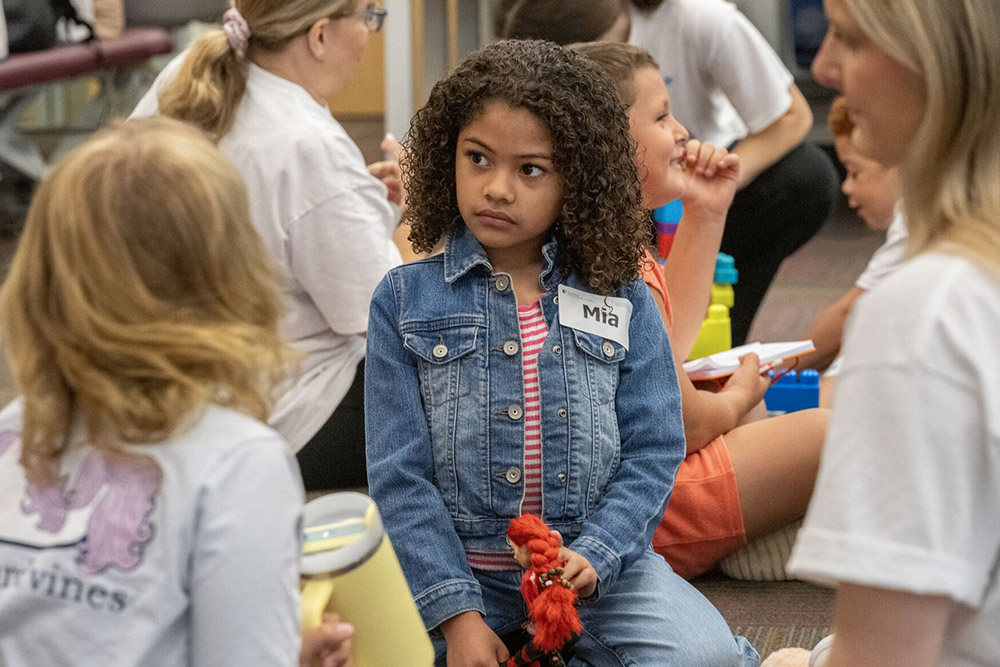
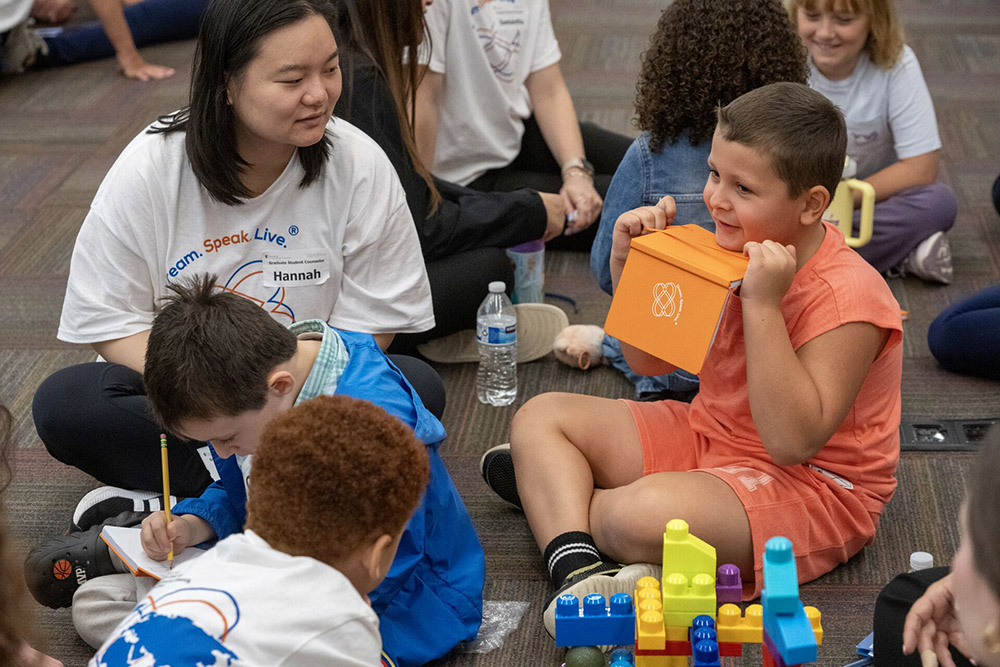
That sense of community is central to the program. Campers spend the week in small groups and one-on-one activities, but much of the learning occurs just by being surrounded by peers who understand the experience of stuttering.
Ten-year-old Lincoln Jaklitsch from Port Jefferson, another returning camper, reconnected with Liam this year. During camp, he practiced disclosure, the act of telling someone that he stutters rather than trying to conceal it. “Disclosure is like you tell people that you have a stutter, but you should not apologize,” Lincoln explained. He imagined introducing himself to a new teacher or classmate by saying, “My name is Lincoln and I have a stutter.”
Lincoln also enjoyed improv sessions, where campers acted like animals, gave deliberately silly answers and practiced being playful in front of one another. The activities helped take away the fear of embarrassment, he said, because no one should feel embarrassed about stuttering.
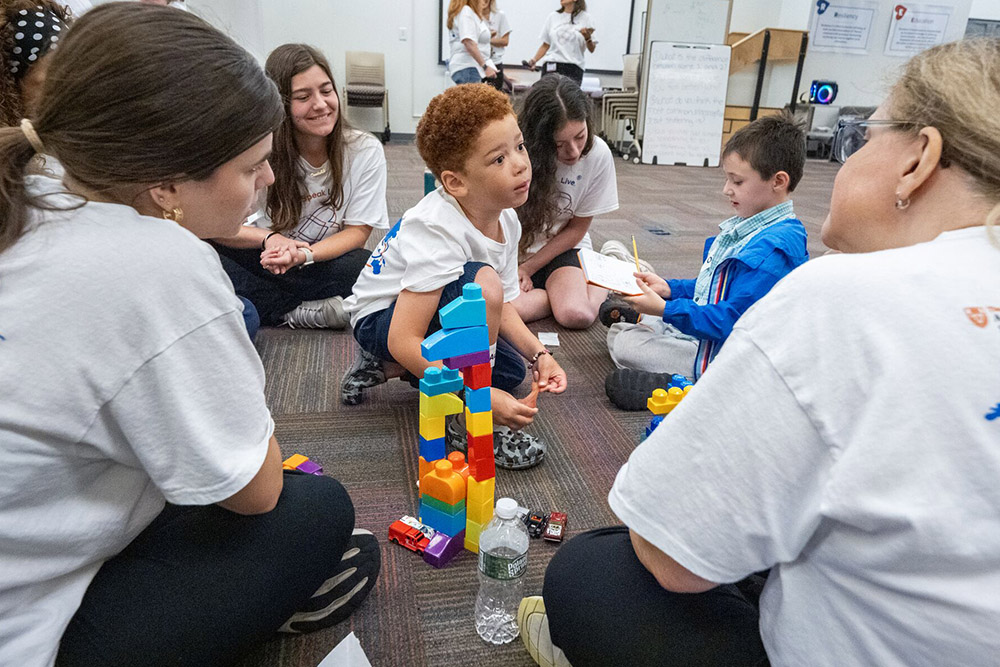
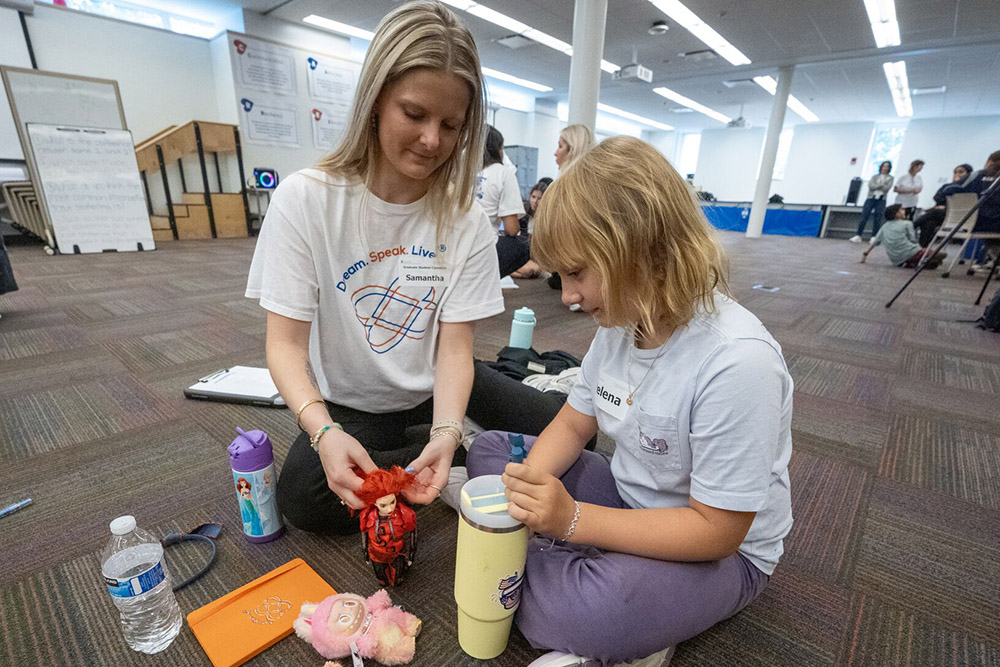
The camp also offers an unusual clinical learning experience for Stony Brook’s graduate speech-language pathology students. Thirty-two graduate students worked with campers throughout the week as part of their clinical education. Some students graduate without ever having worked directly with a person who stutters, Kling said, making the experience particularly valuable.
Rising second-year graduate student Abigail Coyle saw the impact of that support in her assigned camper. “On Monday, she would not want to speak in front of the group,” Coyle said. “On Wednesday, she went up in front of everyone with the microphone completely by herself and disclosed her stutter.”
The experience also changed Coyle’s understanding of treatment. Before participating, she had not yet taken the program’s course on stuttering. The week showed her that the goal is not necessarily to remove a stutter, but to help someone feel calm, comfortable and confident using their voice. “Seeing how much encouragement goes such a long way for people will help me with my future clients,” she said.
Graduate student Jessica Irwin witnessed a similar transformation. Her camper had been reluctant to participate in the talent show last year. This summer, she signed up without hesitation and prepared to dance.
Irwin also described a CARE activity in which campers wrote messages about what they wanted others to understand about stuttering. Her camper wrote that it is okay to stutter and that people should not back down from saying what they want to say.
For department chair Renee Fabus, the program creates a supportive environment for children and adolescents, allows families to connect with others who share their experiences and helps graduate students develop the confidence to work with people who stutter.
“This camp allows us the opportunity to serve the community while preparing our graduate students to become future speech-language pathologists,” Fabus said.
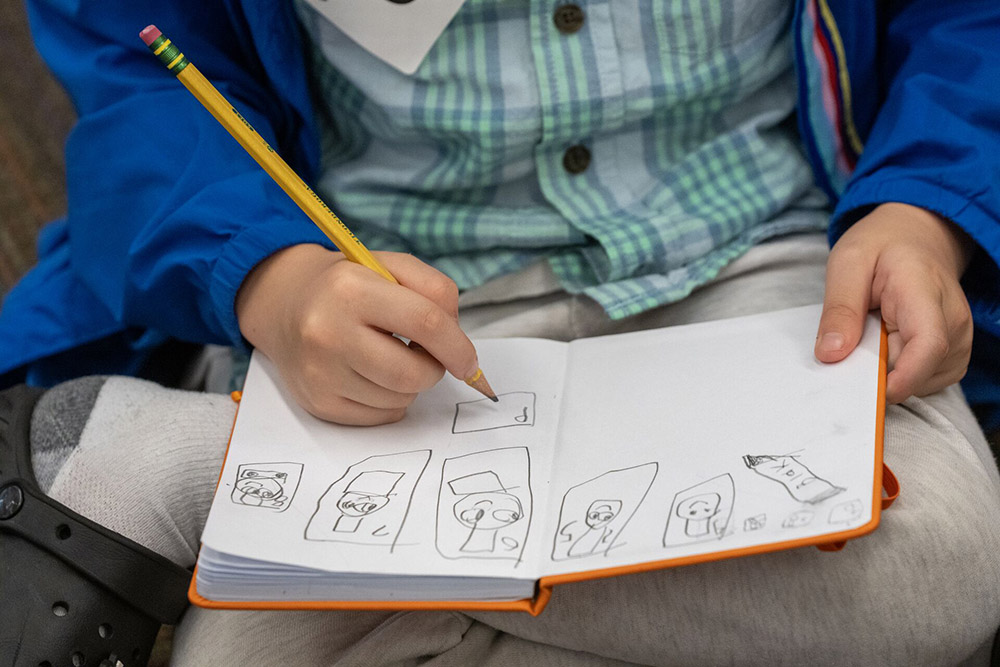
Throughout the week, campers took part in improv, art projects, bracelet making, a visit to the Stony Brook’s School of Marine and Atmospheric Sciences’ Marine Sciences Center, a dance party, games and activities centered on each part of the CARE Model. The open mic brought many of those lessons together, inviting campers to step into the spotlight not because they had learned to speak differently, but because they had learned that what they wanted to say mattered.
By the fourth day, children who had once hesitated to even say the word “stutter” were stepping confidently to the microphone to tell an audience: “I stutter, and I’m proud of it.”
Support for the program was made possible thanks to the Arthur M. Blank Center for Stuttering Education and Research, School of Health Professions Dean Stacy Jaffee Gropack and staff, Vice President for Strategic Initiatives and Executive Director of Stony Brook Southampton Wendy Pearson and staff, Speech-Language Pathology Department faculty, staff, supervisors and students, and community partners, including Limoncello Ristorante and Southampton Publick House.
— Beth Squire





The School of Health Professions is so proud to be part of this important initiative.